


01
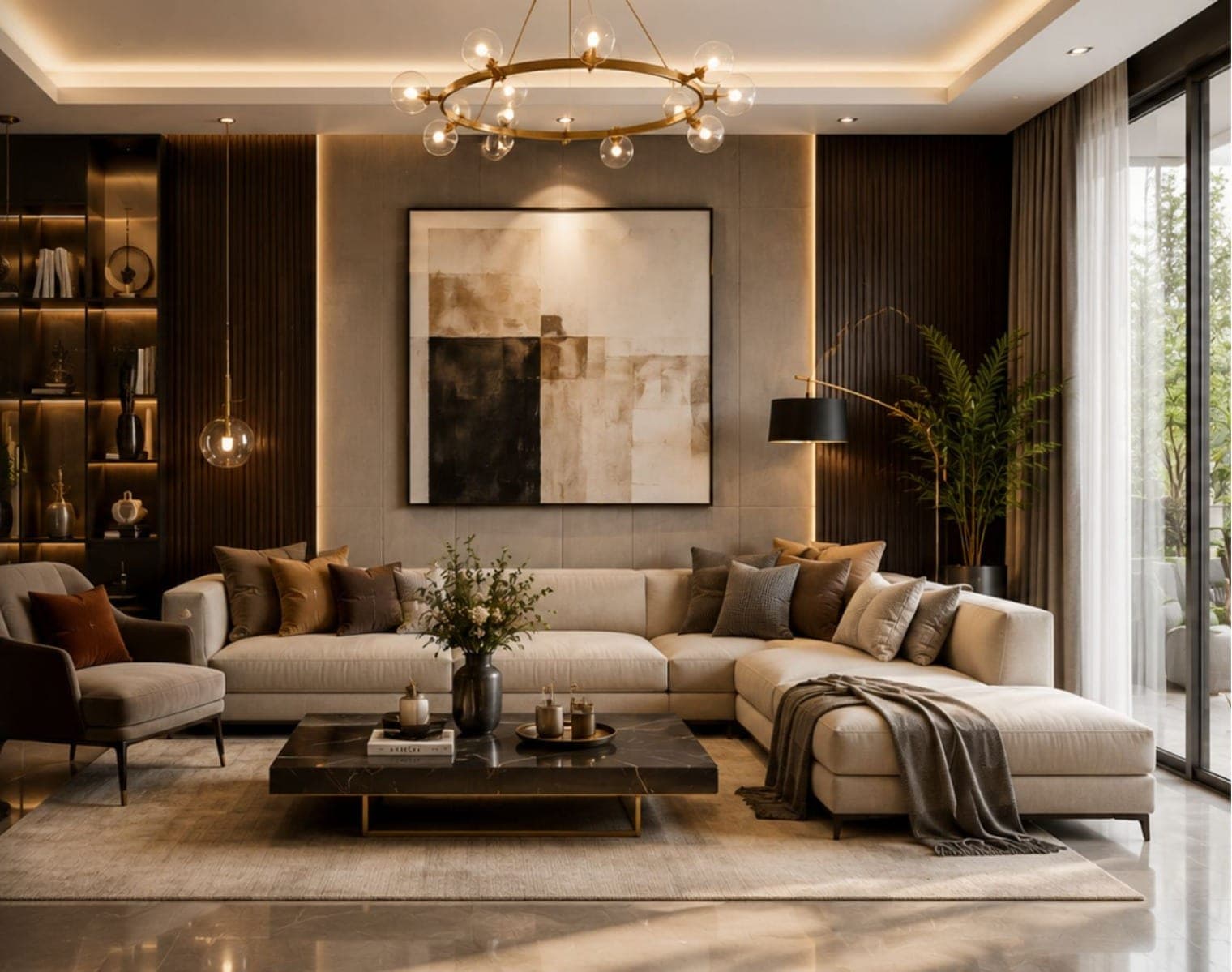
Feature wall
The whole plane built up — surface, relief and light as one — so the wall itself carries the room and barely needs an object hung on it.
A room with good furniture and bare walls always looks like it's still being moved into. Décor isn't the last 5% — it's the part that tells you the room is done. We build the wall up in the right order, back to front, so it reads as designed rather than furnished.
Almost everyone works back to front — buying objects for a wall that hasn't been decided yet. Start at the back: the surface first (paint, texture, panelling), then the relief that catches light (mouldings, niches, shadow gaps), and only then the objects you can change on a Sunday.
Surface, relief, then objects
One done properly, three kept quiet
The top layer swaps in an afternoon

One wall, properly.
Not four, adequately.
A finished wall is built up in layers, back to front, and the order matters more than the budget. These six moves take a wall from bare plaster to something that reads as designed rather than furnished.
Fixing type
Chosen per wall build
A brick wall, a hollow block and a plasterboard false wall each hold weight differently. We pick the anchor for what's actually behind the plaster, not a guess.
Anchoring
Heavy pieces held for their weight
A large mirror or a stone shelf can come down and take the wall with it. Anything with real mass is fixed to a rating well above what it weighs.
Mirror safety
Safety-backed, edges sealed
A big mirror gets a film backing so a knock doesn't shower the floor, and sealed edges so the silvering doesn't black-spot in a humid room.
Cleanability
Ledges you can actually reach
Fluted panels, open niches and top shelves are dust magnets. We keep the layered surfaces within arm's reach and wipeable, not a fortnightly chore on a ladder.
Projection
Depth that clears the walkway
Relief and shelves that stick out are lovely until someone catches a shoulder. On a circulation wall we keep the build shallow enough to walk past cleanly.
Set-out
Laid on the floor first
A grouping is mocked up flat and measured before a single hole is drilled. The wall gets marked to that plan, so nothing lands by eye and by luck.
The whole plane built up — surface, relief and light as one — so the wall itself carries the room and barely needs an object hung on it.
Frames, plates, mirrors and shelves grouped as a single composition, mocked up on the floor first — layered without tipping into clutter.

A restrained few pieces with real depth — a mirror, a form, a shadow that shifts with the light — for a wall that reads finished, not filled.
Furniture fills a room; the walls finish it. Watch a bare wall gain a surface, then relief, then a few considered objects — the moment it stops reading as unfinished is the whole point of the layer.
Buying a mirror for a wall you haven't decided is how décor goes wrong. The surface carries the room, the relief carries the light, and the objects are the easy part — done last, once the two layers behind them are set.
Spread the budget across every wall and nothing lands. Put it into the one wall you look at from the sofa, and leave the other three quiet — that's the difference between a busy room and a finished one.
Feature the wall you face from where you sit
Keep the other three quiet so the eye can rest
Budget concentrated, not scattered thin
Not the wall with the door, never all of them at once
Send us a photo of the room and where you sit — we'll come back with a layered plan for the one wall worth the effort, and what it costs.
Layered wall · Hebbal
Objects · Koramangala
We stopped decorating four walls and did one properly. The room finally works.
Prasun & Puja — 3 BHK, Whitefield
Visit our Bangalore studio. Walk through real kitchens and wardrobes, meet the designer who'll take your project, and leave with a transparent quote.
Tell us about your home and we'll call within 24 hours.
Prefer to talk it through?
Our Bangalore studio is open 10am – 7pm, all days.